
Kitchen Hood Vent Installation in the Wasatch Front
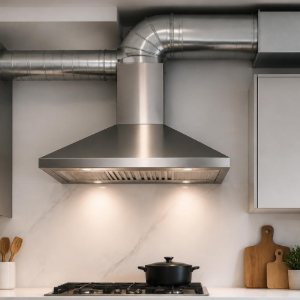
A properly installed kitchen hood vent does more than clear smoke from the air. It protects your home from grease buildup, removes excess heat and humidity, and keeps your indoor air quality where it should be. At Keystone Heating and Air, we handle kitchen hood vent installation for homes and commercial kitchens across West Jordan, Sandy, Heber, Kamas, and the surrounding Wasatch Front. With over 20 years of hands-on experience in mechanical ventilation, we size, route, and install your kitchen exhaust system the right way from the start.
Why Ventilation Matters
More Than Just Clearing Smoke
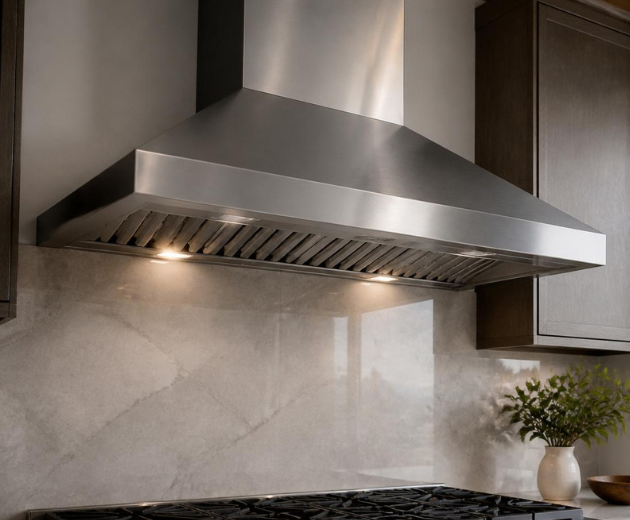
Your kitchen produces heat, grease particles, steam, and combustion byproducts every time you cook. Without a well-designed kitchen exhaust system, those contaminants circulate through your home, settle on surfaces, and degrade your indoor air quality over time. A correctly installed range hood with proper ductwork pulls air out of the cooking zone and vents it to the outside, keeping your kitchen comfortable and your home cleaner. Keystone sizes each installation to match your cooking habits, kitchen layout, and whether you have a gas or electric range, so you get real performance, not just a fan that moves air in circles.
What We Install
Range Hood Ductwork and Exhaust Solutions for Every Kitchen
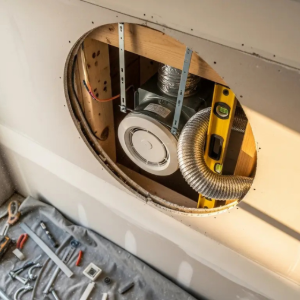
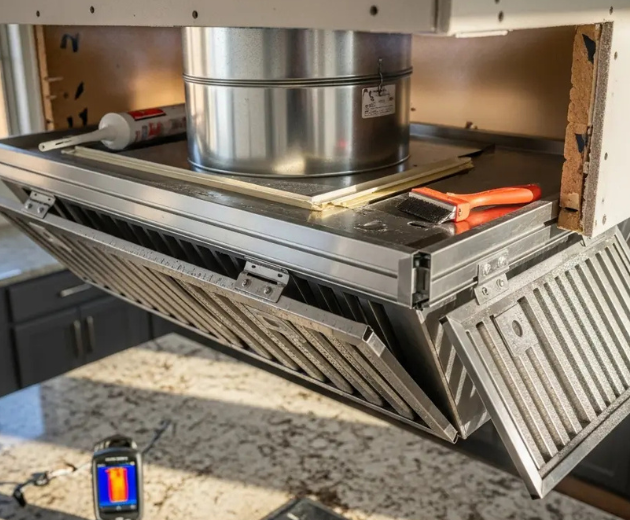
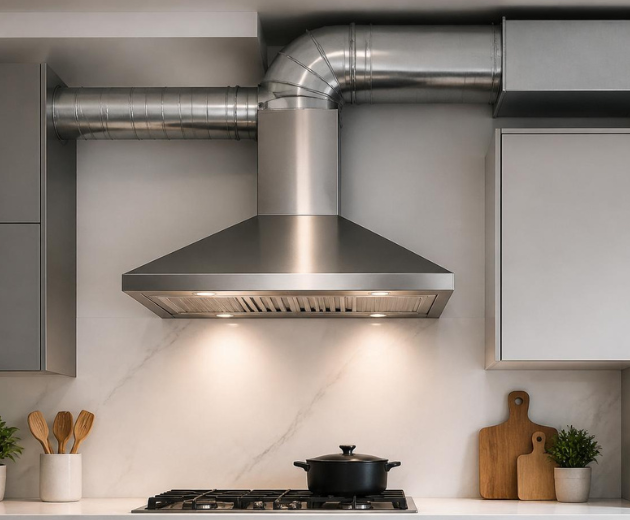
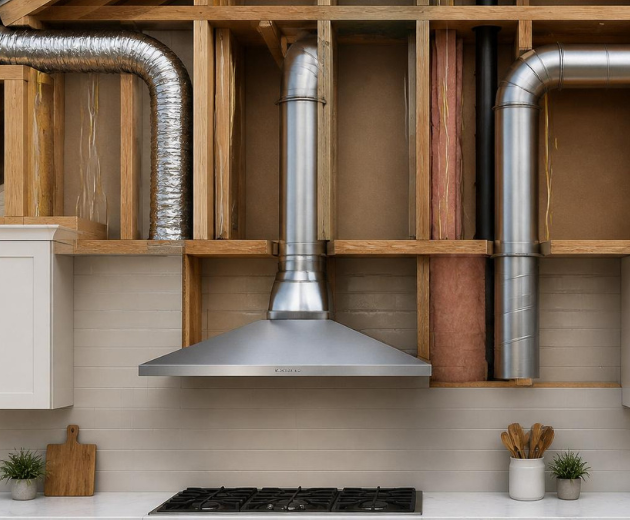
Whether you are upgrading an existing hood, installing a new unit in a kitchen remodel, or adding ventilation to a commercial space, Keystone handles the full scope of work. Our range hood ductwork installation includes routing new duct runs, connecting to exterior wall or roof caps, sealing joints to prevent grease accumulation, and verifying airflow at the source. For commercial kitchen ventilation, we apply the same precision, accounting for higher BTU output, code compliance requirements, and the heavier demands of a professional cooking environment. We serve residential clients across Sandy, Draper, Riverton, Murray, and Sugar House, as well as commercial operators throughout Salt Lake County and the Wasatch Valley.
The Keystone Process
Honest Assessment, Clean Installation, Verified Results
We start every kitchen hood vent project with a thorough assessment of your existing setup, duct routing options, and any obstacles in the wall or ceiling cavity. From there, we give you a plain-language recommendation: no pressure, no upselling equipment you do not need. Once the plan is set, we handle all permits and coordinate with municipal requirements so you do not have to. After installation, we run a full airflow verification and walk you through how the system operates. We also handle rebate paperwork for qualifying high-efficiency ventilation upgrades, removing one more item from your to-do list. That is the Keystone standard on every job, whether it is a ranch home in West Jordan or a mountain property near Jordanelle Reservoir.
Local Expertise You Can Count On
Serving the Wasatch Front with Kitchen Air Circulation Know-How
Utah kitchens face specific challenges. High-altitude homes in Heber, Midway, and Kamas deal with drier air and unique pressure dynamics that affect how exhaust fans perform. Older ranch-style homes in Sandy and West Jordan often have ductwork that was never designed for modern cooking equipment. Keystone brings 20 years of regional experience to every kitchen air circulation project, understanding how local construction styles and elevation affect ventilation performance. We are locally owned and operated, and we stand behind every installation with an upfront, honest diagnosis and no hidden fees. When you want a kitchen exhaust system that actually works for your home and your climate, Keystone is the call to make.
Common Questions
Kitchen Hood Vent FAQs
Do I need a permit to install a kitchen hood vent in Utah?
In most Utah municipalities, a permit is required when new ductwork is added or existing ductwork is significantly modified as part of a kitchen hood installation. The specific requirements vary by city, but Keystone handles all permit coordination on your behalf. We work directly with local municipal offices in West Jordan, Sandy, Draper, and other service areas to make sure your installation meets code. You do not need to navigate that process yourself. Our team takes care of the paperwork so the job is done right and fully compliant from start to finish.What is the difference between a vented and a recirculating range hood?
A vented range hood uses ductwork to pull air out of the kitchen and exhaust it to the outside of the home. This is the more effective option because it physically removes grease, heat, moisture, and combustion byproducts from your living space. A recirculating hood filters the air and pushes it back into the kitchen, which can reduce odors but does not remove heat or humidity. Keystone installs ducted kitchen exhaust systems and handles all the ductwork routing required. For most Utah homes and kitchens, a properly vented system delivers significantly better indoor air quality and long-term performance.How do I know what size range hood I need for my kitchen?
Sizing a range hood depends on several factors, including the type of range you have, the BTU output of your burners, the size of your kitchen, and the length of the duct run to the exterior. Gas ranges typically require higher airflow capacity than electric ranges. Keystone assesses your specific kitchen layout and cooking setup before recommending a system. We do not apply a one-size-fits-all approach. Proper sizing ensures the hood actually captures contaminants at the source rather than just moving air around, which is a common problem with undersized or poorly installed units.Can a kitchen hood vent be added to an older home that has no existing ductwork?
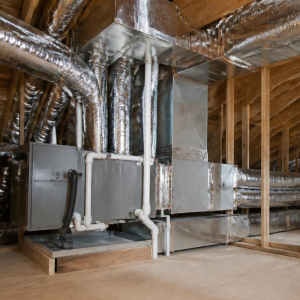
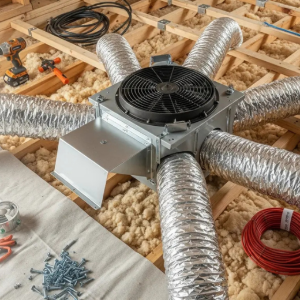
Yes. Many older ranch-style homes in Sandy, West Jordan, and other parts of the Wasatch Front were built without kitchen exhaust ductwork. Keystone routinely installs new duct runs in these homes, routing through walls, cabinets, or attic spaces to reach an exterior termination point. Every installation starts with an assessment of the available routing options so we can find the most practical and code-compliant path. We also seal all duct joints to prevent grease accumulation and ensure the system maintains proper airflow over time. Lack of existing ductwork is not a barrier to getting a fully functional exhaust system.Does altitude affect how a kitchen exhaust system performs in places like Heber or Kamas?
Altitude does have a measurable effect on air density, which in turn affects how much air a fan can move per minute. At elevations of 5,800 feet or higher, like those found in Heber, Midway, and Kamas, a standard fan rated at sea level may not deliver the same effective airflow. Keystone accounts for these altitude-specific conditions when sizing and selecting ventilation equipment for mountain properties. This is part of our broader expertise in serving high-elevation homes across the Wasatch Valley, where standard specifications do not always translate directly to real-world performance.Does Keystone handle commercial kitchen ventilation as well as residential installs?
Yes. Keystone installs and services kitchen exhaust systems for commercial kitchens as well as residential properties. Commercial applications involve higher airflow requirements, stricter code compliance standards, and equipment that needs to handle heavier and more continuous use. Our team is experienced in commercial HVAC and ventilation work across Salt Lake County and the surrounding region. If you operate a restaurant, cafe, or other food service business and need a kitchen ventilation system assessed, installed, or repaired, Keystone can provide an honest evaluation and a straightforward quote.How long does a kitchen hood vent installation typically take?
Most residential kitchen hood vent installations are completed in a single day. The timeline depends on the complexity of the duct routing, whether new ductwork needs to be run through walls or the attic, and the type of hood being installed. Keystone coordinates all equipment and project logistics in advance so the work day runs efficiently. For commercial installations or more complex duct configurations, the timeline may extend, but we communicate the full scope before any work begins. Our goal is to complete every job with minimal disruption to your home or business.
Common Questions
Kitchen Hood Vent FAQs
Your feedback helps us continue providing reliable heating and cooling services while helping others choose a team they can trust. If we've worked with you, we'd appreciate you taking a moment to leave us a testimonial.